Crypto staking lets you earn passive income from your digital assets while supporting blockchain networks. If you’re an Indian crypto investor looking to generate steady returns without active trading, staking offers a compelling opportunity to put your cryptocurrency to work.
This guide is designed for beginners who want to start earning crypto staking rewards in India, as well as experienced investors seeking to optimize their passive income strategies. You’ll learn practical steps to begin staking and discover the best approaches for the Indian market.
We’ll cover the fundamentals of cryptocurrency staking and how it works, explore the top staking platforms and coins available to Indian users, and walk you through setting up your first staking position. You’ll also discover how to manage risks and maximize your staking rewards while staying compliant with Indian regulations.
Understanding Cryptocurrency Staking Fundamentals

What is crypto staking and how it works
Crypto staking is a process that allows you to earn rewards by putting your cryptocurrency to work on blockchain networks. When you participate in crypto staking India, you’re essentially helping the network run smoothly and securely while earning passive crypto income in return. Unlike traditional lending, staking doesn’t involve lending out your crypto – instead, you receive rewards directly from the network itself for contributing to its operations.
The staking process operates through a systematic approach where users, known as crypto stakers, can stake their tokens within a network for a chance to be selected as validators. To participate, users must stake a minimum number of tokens as required by each specific network. Once tokens are staked, they become locked and cannot be used for anything else until you decide to withdraw them.
The reward mechanism works by randomly selecting one validator who becomes responsible for proposing a new block to the network and updating the ledger. In exchange for this responsibility, the chosen validator receives block rewards. Other validators in the network continuously review and cross-check each block to ensure accuracy and hold the chosen validator accountable, creating a robust system of checks and balances.
For those interested in cryptocurrency staking guide fundamentals, it’s important to understand that staking represents a collaborative approach where multiple participants contribute to network security while earning crypto rewards based on their stake size and network participation.
How staking helps verify transactions and secure blockchain networks
Staking plays three crucial roles in maintaining blockchain network integrity and functionality. First, validators are responsible for verifying and batching transactions into blocks, checking the work of other validators to keep the blockchain accurate and efficient. This verification process ensures that all transactions are legitimate before they’re permanently recorded on the blockchain.
Second, staking secures the network through a collateral system where validators must stake their own coins as security. This creates strong financial incentives for honest behavior – if a validator acts maliciously, there are severe financial repercussions known as “slashing,” where the validator can lose some or all of their staked coins. This economic deterrent significantly reduces the likelihood of fraudulent activities.
Third, the staking mechanism facilitates the circulation of new coins into the market. Rewards are distributed to chosen validators because they take responsibility for creating new blocks and accurately updating the blockchain ledger. This process ensures continuous network operation while providing passive crypto income India opportunities for participants.
The collaborative nature of staking creates a decentralized network of validators and asset holders who collectively verify and process crypto transactions, eliminating the need for centralized intermediaries like traditional banks. This decentralization strengthens network security while distributing control among multiple participants.
Proof-of-stake vs other consensus mechanisms
Crypto staking relies specifically on the proof-of-stake (PoS) consensus mechanism, which differs fundamentally from other blockchain validation methods. In PoS systems, one validator is randomly chosen from a pool of willing participants based on their stake size and other network-specific factors.
The key distinction of proof-of-stake lies in its selection process and energy efficiency. Unlike proof-of-work systems that require extensive computational power and energy consumption, PoS networks select validators through a randomized process that considers the amount of cryptocurrency staked. This makes staking coins India and similar markets more environmentally sustainable and accessible to a broader range of participants.
In proof-of-stake networks, the validation process creates a continuous cycle where validators propose new blocks, other validators review and verify the accuracy of these blocks, and nodes cross-check each other for ongoing accuracy. This systematic approach ensures network integrity while maintaining efficiency and reducing energy consumption compared to mining-based consensus mechanisms.
The PoS mechanism also enables various participation methods, including solo staking where individuals operate their own hardware nodes, staking-as-a-service where node operations are outsourced, and pooled staking where multiple users collaborate to meet minimum staking requirements. These options make crypto staking for beginners more accessible while accommodating different levels of technical expertise and investment capacity.
Benefits of Crypto Staking for Indian Investors

Earn up to 14% annual percentage yield on your holdings
Crypto staking rewards in India can provide substantial returns for long-term investors. According to the reference analysis, staking rewards explained show that annual percentage yields vary significantly based on the chosen cryptocurrency and platform. For Ethereum staking, investors can expect approximately 3.95% annual returns, with platforms like Blocknative calculating potential earnings of $1,154.70 on a 10 ETH stake over one year.
However, liquid staking protocols offer even more attractive returns. When staking through liquid staking pools with platforms like Lido or Rocket Pool, investors can potentially earn up to 16.69% annual returns, even after accounting for the typical 10% staking fee. This makes crypto staking India particularly appealing for those seeking higher yields than traditional fixed deposits.
Generate passive income without active trading
One of the most significant crypto staking benefits for Indian investors is the ability to earn passive crypto income India without the stress and time commitment of active trading. Unlike day trading, which requires constant market monitoring and decision-making, staking allows you to earn rewards simply by holding your tokens in a staking contract.
This approach is particularly beneficial for HODLers who plan to hold their cryptocurrencies long-term. As compared to simply holding tokens, staking provides an advantage by multiplying the number of tokens you own. Even if token prices fluctuate, having more tokens through staking rewards means your portfolio value remains higher than just holding static coins.
Start with as little as $1 investment
Crypto staking for beginners becomes accessible through liquid staking pools that have low entry barriers. The beauty of modern staking platforms lies in their inclusivity – you don’t need to meet the minimum network requirements individually. Instead, participants can pool their resources together to meet network thresholds.
For example, if you have just 2 ETH tokens, you can still participate in staking through liquid staking protocols and earn substantial rewards without compromising on total yields. Most exchanges supporting staking coins India allow users to start with minimal amounts, making it easier for new investors to begin their staking journey without significant capital requirements.
Zero losses track record on trusted platforms
When using established and best staking platforms India, investors benefit from the security and reliability of proven infrastructure. Trusted platforms maintain robust validator networks and have demonstrated consistent performance over time. The Ethereum network, for instance, saw community confidence with 8,80,000 ETH deposited for staking even without definite withdrawal deadlines, showcasing the trust in established protocols.
However, it’s important to note that while trusted platforms maintain excellent operational records, crypto staking rewards are still subject to market volatility. The underlying token prices can fluctuate, but the staking mechanism itself on reputable platforms has shown consistent reward distribution based on network protocols and validator performance.
Popular Staking Options and Reward Rates
A. Ethereum (ETH) staking opportunities and returns
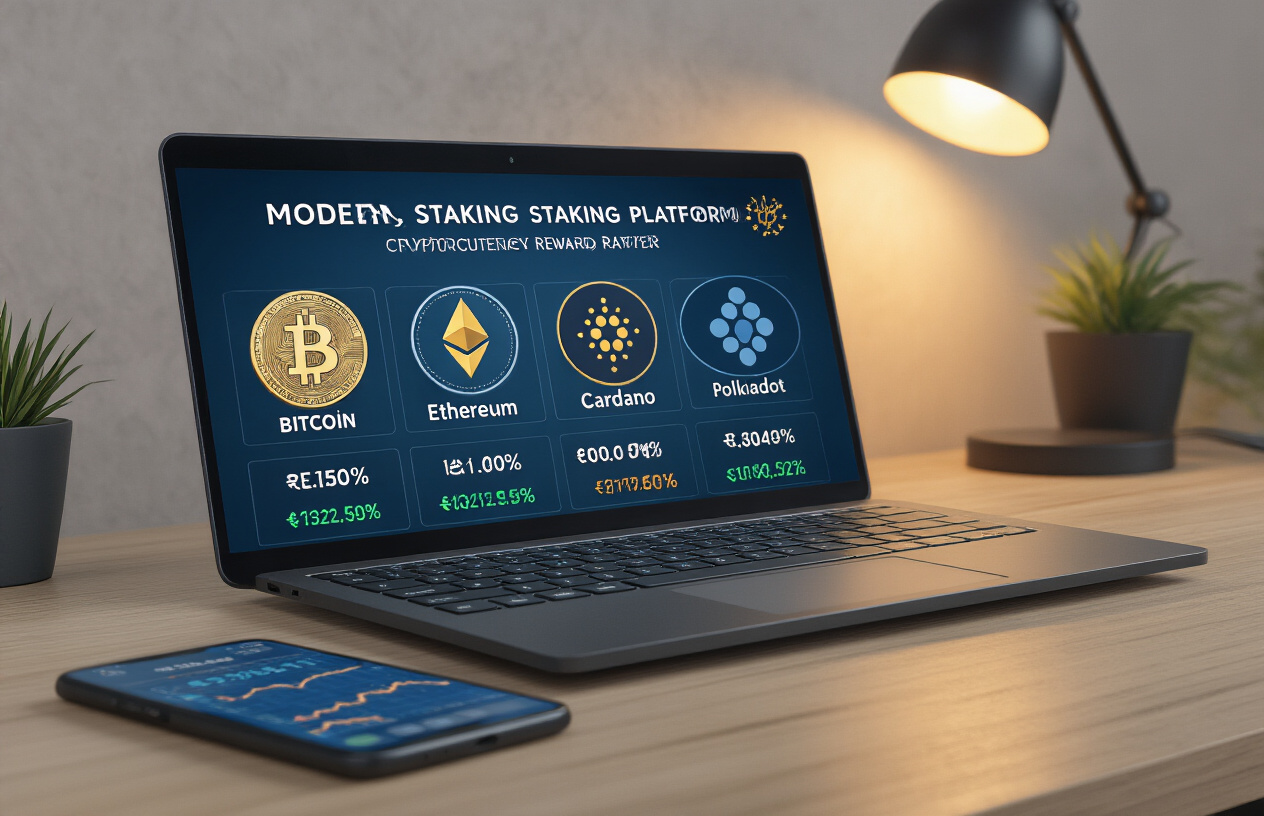
Ethereum staking has emerged as one of the most popular crypto staking options in India, offering competitive rewards while providing exposure to the largest proof-of-stake network. ETH staking typically offers lower APY compared to many altcoins, but compensates with a stronger liquidity profile and deeper institutional relevance. Ethereum remains the core network for DeFi, stablecoins, tokenization, NFTs, and Layer 2 settlement, making it an attractive option for Indian investors seeking passive crypto income.
The appeal of cryptocurrency staking ETH lies in its proven network stability and widespread adoption. Coinbase customers have earned over $450 million in staking rewards in 2024 alone, with zero losses reported from their staking platform. For Indian investors looking to earn crypto rewards, ETH staking can be done through multiple methods including solo staking (requiring 32 ETH), staking providers, exchanges, or liquid staking protocols, depending on technical expertise and risk tolerance.
Platforms like Coinbase offer ETH staking with variable reward rates set by the blockchain, reaching up to 14% APY. The process is designed to be beginner-friendly, requiring no crypto expertise and allowing users to start with as little as $1. Additionally, wrapped staked ETH (cbETH) provides faster liquidity options for those needing immediate access to their funds.
B. USDC rewards and lending programs earning up to 10.3%
For Indian crypto investors seeking stable returns, USDC offers compelling staking and lending opportunities that can significantly enhance passive crypto income India. Leading platforms provide USDC lending programs that deliver up to 10.3% APY, making it one of the most attractive options for conservative crypto investors in India.
Coinbase’s lending program, powered by Morpho on Base and Steakhouse Financial, exemplifies the evolution of USDC earning opportunities. This program offers competitive APYs through a simple deposit mechanism where earnings accrue automatically. The high yield potential makes USDC lending particularly appealing for crypto staking for beginners who prefer stable asset exposure over volatile cryptocurrencies.
Additionally, USDC rewards programs offer unlimited 3.50% rewards with premium memberships, providing consistent returns for Indian investors. These programs represent a significant advancement in best staking platforms India, combining the stability of USD-backed assets with attractive yield generation. The appeal lies in the balance between reasonable returns and reduced volatility compared to traditional cryptocurrency staking options.
C. Flexible staking with no lockup requirements
Flexible staking has revolutionized how to start crypto staking by eliminating the traditional barriers of lengthy lockup periods. Modern staking platforms now offer no-lockup staking solutions, allowing Indian investors to maintain control over their assets while earning rewards. This approach addresses one of the primary concerns for newcomers to crypto staking India – the fear of having funds locked away for extended periods.
Platforms emphasizing flexible staking allow users to withdraw their funds whenever needed, with earnings accruing automatically throughout the holding period. This flexibility is particularly valuable for Indian crypto investors who may need quick access to their capital for various financial needs. The no-lockup model eliminates the opportunity cost associated with traditional staking, where funds could be locked while market conditions change rapidly.
Cardano (ADA) exemplifies beginner-friendly delegation where users can delegate tokens to stake pools while maintaining control of their funds. This model makes crypto staking for beginners more accessible, as it combines earning potential with the peace of mind that comes from maintaining liquidity. The flexible approach has made staking more attractive to conservative investors who previously avoided staking due to lockup concerns.
D. Instant unstaking features for immediate liquidity
Instant unstaking represents a significant innovation in crypto staking rewards, addressing liquidity concerns that have historically deterred many Indian investors. This feature allows users to access their staked assets immediately, typically for a small fee, rather than waiting for traditional unstaking periods that can range from minutes to several weeks.
Coinbase’s instant unstaking feature exemplifies this innovation, charging a 1% fee for immediate access to staked assets. This option provides crucial flexibility for Indian crypto investors who may need rapid access to their funds during market opportunities or personal financial needs. The service ensures that users don’t have to choose between earning staking rewards and maintaining liquidity.
The unstaking process varies significantly across different cryptocurrencies. While some assets like Solana (SOL) require a few days for standard unstaking, instant options eliminate this waiting period. For staking coins India investors, this feature has become increasingly important as it allows participation in staking programs without sacrificing the ability to respond quickly to market changes or emergency financial situations.
These instant liquidity features have made crypto staking India more accessible to risk-averse investors who previously avoided staking due to concerns about fund accessibility. The combination of earning potential with maintained liquidity options represents the evolution of staking platforms toward more user-friendly and practical solutions for the Indian crypto market.
Getting Started with Staking Platforms

Setting up accounts on trusted exchanges
Now that you understand the fundamentals of crypto staking, the next step involves selecting and setting up accounts on reliable staking platforms. Based on the available options for staking enthusiasts, several established exchanges offer comprehensive staking services with varying fee structures and coin selections.
Binance.US stands out with one of the largest selections, offering staking on 22 different cryptocurrencies including Ethereum, Solana, Cardano, and Polkadot. The platform charges a service fee ranging from 30 to 35 percent depending on the specific coin you choose to stake.
Coinbase provides a more curated approach with 9 cryptocurrencies available for individual staking, including major options like Ethereum, Solana, Cardano, Avalanche, and Polkadot. Their fees range between 25.25 and 35 percent based on the coin and your membership tier, with published rates already reflecting these deductions.
For those seeking simplicity, Gemini offers a straightforward setup with staking available for Ethereum and Solana (though Solana staking is restricted for U.S. investors). The platform takes up to 30 percent of total rewards as fees but requires no minimum staking amount.
When setting up your account, ensure you complete the necessary KYC (Know Your Customer) verification processes, which typically include identity verification and address confirmation. Most platforms require you to enable two-factor authentication for enhanced security before allowing staking activities.
Minimum balance requirements and eligibility criteria
Previously, we’ve discussed platform selection, but understanding eligibility requirements is crucial for successful staking participation. Different exchanges implement varying minimum balance requirements and geographical restrictions that directly impact your ability to earn crypto rewards.
Gemini offers the most accessible entry point, allowing clients to stake any amount of cryptocurrency with no minimum balance requirement. This makes it particularly suitable for beginners looking to start crypto staking with smaller investments.
However, geographical restrictions significantly impact platform eligibility. Several major staking platforms have specific limitations for different regions:
- KuCoin and ByBit do not permit American customers to participate in their staking programs
- Crypto.com excludes U.S. residents from their staking services entirely
- Kraken restricts American traders from accessing their staking program despite offering 20 different cryptocurrencies for staking
For Indian crypto staking enthusiasts, it’s essential to verify platform availability in your region during the account setup process. Most platforms will clearly indicate geographical restrictions during registration, and attempting to bypass these restrictions could result in account suspension.
The eligibility criteria typically include:
- Age verification (usually 18+ years)
- Valid government-issued identification
- Proof of residence in an eligible jurisdiction
- Completed KYC verification process
Understanding variable reward rates and protocol changes
With this in mind, next, we’ll examine how staking rewards fluctuate and the impact of protocol modifications on your passive crypto income. Reward rates in crypto staking are inherently variable and subject to multiple factors that can significantly affect your earnings over time.
Exchange fee structures play a substantial role in determining your actual returns. For instance:
| Platform | Fee Range | Impact on Rewards |
|---|---|---|
| Coinbase | 25.25% – 35% | Published rates already reflect fees |
| Binance.US | 30% – 35% | Fees deducted from gross rewards |
| Gemini | Up to 30% | Variable based on total reward amount |
These fees are deducted from the gross staking rewards before distribution to your account, making it crucial to factor them into your income calculations.
Protocol changes within blockchain networks can also dramatically impact reward rates. When cryptocurrencies modify their staking mechanisms, minimum requirements, or reward distribution methods, your earnings potential may increase or decrease accordingly. Networks may adjust their inflation rates, change validator requirements, or modify the overall reward pool allocation.
Market demand for staking participation also influences reward rates. When fewer users participate in staking for a particular cryptocurrency, reward rates typically increase to incentivize participation. Conversely, high participation rates often lead to reduced individual rewards as the total reward pool gets distributed among more participants.
Automatic restaking of earned rewards
The final component of getting started with staking platforms involves understanding automatic reward reinvestment features. Many exchanges offer automatic restaking or compound staking options that can significantly enhance your long-term passive crypto income through the power of compounding.
When you enable automatic restaking, your earned rewards are immediately added to your staking balance rather than being held separately in your account. This process creates a compounding effect where your rewards generate additional rewards, potentially accelerating your income growth over time.
ByBit offers particularly attractive terms for automatic restaking, charging no fees for staking services across their 183 available cryptocurrencies. This fee-free structure maximizes the compounding benefits since no portion of your rewards is deducted before reinvestment.
The automatic restaking feature typically works as follows:
- Rewards are distributed according to the network’s schedule (daily, weekly, or per epoch)
- Earned rewards are automatically added to your existing staking balance
- The increased balance generates proportionally higher future rewards
- The cycle continues, creating exponential growth potential
However, consider the implications of automatic restaking on your liquidity needs. When rewards are automatically restaked, they become subject to the same staking terms and potential lock-up periods as your original investment. If you need regular access to your earned rewards for other purposes, you might prefer manual reward collection over automatic reinvestment.
Some platforms allow you to customize your restaking preferences, enabling you to automatically restake a percentage of rewards while keeping the remainder liquid for other uses.
Managing Staking Risks and Considerations

Understanding Unstaking Periods and Withdrawal Delays
When you begin crypto staking India, it’s crucial to understand that your assets won’t be immediately accessible. Unlike traditional savings accounts, staked cryptocurrencies are locked up for specific periods to support blockchain operations. The redemption or “unstaking” process typically doesn’t trigger a tax event in itself, provided there’s no change in ownership or value during withdrawal.
Different staking platforms and protocols impose varying unstaking periods. Some allow immediate withdrawals while charging fees, while others enforce fixed lock-up periods ranging from days to weeks. Understanding these timeframes is essential for your liquidity planning, as you won’t be able to access your staked funds during market volatility or emergencies.
Asset Security and Custody Arrangements
Security remains paramount when engaging in crypto staking for beginners. Your staked assets are held either on centralized exchanges or in smart contracts on decentralized platforms. Each arrangement comes with distinct risk profiles that directly impact your passive crypto income India strategy.
Centralized platforms typically provide user-friendly interfaces and customer support but require trusting the platform with custody of your assets. Decentralized staking involves smart contract risks and technical complexity but offers greater control over your holdings. Consider the platform’s track record, insurance coverage, and security measures when choosing where to stake your crypto rewards.
Tax Implications of Staking Rewards in India
Now that we’ve covered the operational aspects, let’s examine the tax considerations that significantly impact your earn crypto rewards strategy. In India, the Income Tax Department classifies cryptocurrencies as Virtual Digital Assets (VDAs), creating a complex taxation framework for staking activities.
Staking rewards face dual taxation in India:
- Income Tax on Receipt: When you receive staking rewards, they’re considered income and taxed at your applicable income tax slab rate. The taxable amount equals the Fair Market Value (FMV) of tokens at receipt time.
- Capital Gains Tax on Disposal: If you later sell, swap, or spend staking rewards, any profit is subject to a flat 30% tax under Section 115BBH, calculated as the difference between sale price and FMV at receipt.
For example, if you earn 5 SOL tokens worth ₹30,000 as staking rewards, this amount is added to your income. If you later sell these tokens for ₹36,000, the ₹6,000 capital gain is taxed at 30% plus 4% cess.
Key tax provisions affecting your cryptocurrency staking guide include:
- Section 115BBH: Imposes 30% tax on VDA transfer profits
- Section 194S: Mandates 1% TDS on VDA transfers exceeding ₹50,000 annually
- Rule 11UA: Provides FMV determination guidelines
Staking rewards must be reported under “Income from Other Sources” in your Income Tax Return, while profits from selling rewards go under capital gains. Importantly, losses from VDAs cannot offset other income or be carried forward.
Platform Fees and Instant Unstaking Charges
With this in mind, next we’ll examine the fee structures that impact your best staking platforms India selection. Most platforms charge various fees that can significantly affect your net returns from passive crypto income India activities.
Common fee structures include:
- Management fees: Annual percentage charges on staked amounts
- Performance fees: Percentage of rewards earned
- Instant unstaking fees: Premium charges for immediate withdrawals
- Network fees: Blockchain transaction costs
Instant unstaking typically involves additional charges ranging from 0.5% to 5% of the unstaked amount, depending on the platform and asset. These fees compensate for the liquidity risk platforms assume when allowing early withdrawals from locked staking positions.
Additionally, the 1% TDS requirement under Indian tax law means platforms must deduct taxes on crypto transfers, affecting your net proceeds. When comparing staking coins India options, factor in all fees to calculate your actual returns and ensure compliance with tax obligations.
Advanced Staking Strategies

Wrapped Staked Tokens for Enhanced Liquidity
Wrapped staked tokens represent a revolutionary advancement in crypto staking strategies, addressing the traditional liquidity constraints that have limited stakers’ flexibility. Liquid staking derivatives (LSDs) enable you to maintain access to your capital while earning staking rewards, effectively eliminating the opportunity cost of lock-up periods.
When you participate in liquid staking through protocols like Lido Finance, you receive tokenized representations of your staked assets (such as stETH for Ethereum). These derivative tokens can be traded, used as collateral in DeFi protocols, or employed in yield farming strategies while your original assets continue earning staking rewards. This innovation allows you to respond to market movements without forgoing your passive crypto income streams.
The primary advantage lies in capital efficiency – you can simultaneously earn staking rewards and participate in other investment opportunities. For instance, you might stake ETH through Lido to receive stETH, then use that stETH as collateral for loans or liquidity provision in automated market makers. This strategy maximizes your earning potential across multiple income streams within the cryptocurrency ecosystem.
Boosted Rewards Through Premium Memberships
Premium membership programs on staking platforms offer enhanced reward structures and additional benefits for committed stakers. These programs typically provide higher APYs, reduced fees, and priority access to new staking opportunities, making them attractive for serious investors looking to maximize their crypto staking rewards.
Many platforms implement tiered systems where holding specific amounts of platform tokens or maintaining certain staking volumes unlocks premium benefits. These memberships often include features like:
- Reduced validator commission fees
- Enhanced reward multipliers
- Priority customer support
- Early access to new staking assets
- Exclusive educational resources
The fee structures vary significantly between platforms. For example, while a standard staking setup might charge a 25% platform fee plus 5% validator commission on a 10% APY (resulting in approximately 7% net returns), premium members often enjoy reduced fees that can increase net yields substantially.
When evaluating premium memberships, consider the long-term value proposition against the additional costs or token holdings required. Calculate whether the enhanced rewards justify the membership requirements, especially considering market volatility that could affect both your staked assets and membership tokens.
Diversifying Across Multiple Staking Assets
Portfolio diversification remains one of the most effective risk management strategies in crypto staking. By distributing your stakes across multiple cryptocurrencies and networks, you reduce dependency on any single protocol while capturing varied reward opportunities across the blockchain ecosystem.
Effective diversification involves staking across different consensus mechanisms and blockchain architectures. Consider allocating portions of your portfolio to:
Established Networks:
- Ethereum (ETH): 2.9-3.3% APY with proven security
- Cardano (ADA): 2.4-5% APY with no minimum requirements
- Solana (SOL): 6.8% APY with short 2-3 day unbonding periods
Higher-Yield Opportunities:
- Polkadot (DOT): 11.5-13% APY with 28-day unbonding
- Cosmos (ATOM): 21% APY with 21-day unbonding periods
When diversifying, evaluate factors beyond yield rates including network security, development activity, community strength, and long-term viability. Balance high-yield opportunities with stable, established networks to create a resilient staking portfolio that can weather market volatility while maintaining consistent passive income generation.
Institutional vs Individual Staking Solutions
The staking landscape offers distinct pathways for institutional and individual participants, each with unique advantages and considerations. Understanding these differences helps you choose the most appropriate staking approach based on your resources, technical expertise, and risk tolerance.
Individual Staking Options:
Solo staking provides maximum control and rewards but requires significant technical knowledge and substantial capital commitments. For Ethereum, you need 32 ETH plus hardware infrastructure and constant monitoring. Pool staking offers a middle ground, allowing smaller participants to combine resources while sharing rewards and responsibilities.
Exchange staking provides the simplest entry point with platforms handling all technical aspects. However, this convenience comes with custody risks and typically lower net rewards due to platform fees.
Institutional Solutions:
Institutional staking platforms like Cobo offer enterprise-grade infrastructure with non-custodial MPC (Multi-Party Computation) wallets that distribute cryptographic key shares across multiple parties, eliminating single points of failure. These solutions provide:
- Advanced security features including role-based access controls
- Comprehensive audit logs and compliance reporting
- API integrations for institutional scaling
- Vetted validator networks with high reliability
- Professional-grade monitoring and performance analytics
Institutional platforms typically charge commission-based fees (such as 5% on protocol rewards) but offer enhanced security, reliability, and operational support that justifies the costs for large-scale operations. The choice between individual and institutional solutions depends on your capital scale, technical capabilities, and regulatory requirements within the Indian cryptocurrency landscape.

Cryptocurrency staking presents a compelling opportunity for Indian investors to generate passive income while contributing to blockchain network security. By understanding the fundamentals, exploring popular platforms, and implementing proper risk management strategies, you can start earning rewards on your crypto holdings. Whether you choose centralized platforms offering competitive rates or advanced strategies for higher yields, the key is to start with small amounts and gradually build your knowledge and portfolio.
The growing accessibility of staking services, with options to start with as little as $1 and immediate liquidity features, makes this investment strategy more approachable than ever. As the crypto landscape continues evolving in India, staying informed about regulatory developments and platform updates will help you maximize your staking rewards while minimizing risks. Take the first step today by selecting a reputable platform and begin your journey toward earning passive crypto income through staking.