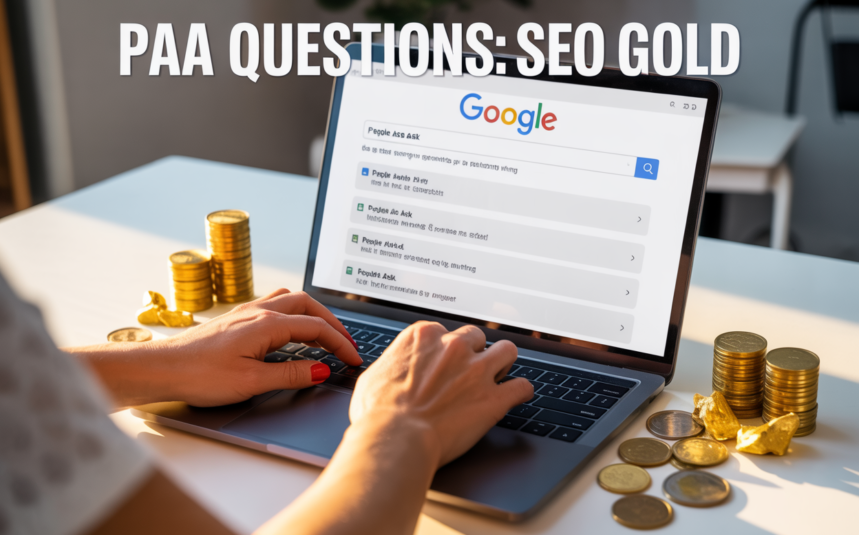
Google’s People Also Ask boxes appear in over 43% of search results, yet most marketers ignore this goldmine of SEO opportunities. PAA questions reveal exactly what your audience wants to know, giving you a direct path to featured snippets, voice search optimization, and higher rankings.
This guide is for content marketers, SEO specialists, and business owners who want to tap into the power of PAA optimization to drive more organic traffic. You’ll discover how to find high-value PAA questions that your competitors are missing and learn proven strategies for creating content that consistently ranks in these coveted spots.
We’ll walk through the real SEO benefits of targeting People Also Ask questions, show you practical methods for PAA keyword research in your niche, and share advanced tactics that turn PAA content strategy into a traffic-generating machine.
Understanding PAA Questions and Their SEO Impact

What People Also Ask boxes are and how they appear in search results
People Also Ask (PAA) boxes are interactive dropdown sections that appear in Google’s search results, typically showing 3-4 related questions that users commonly search for. These boxes expand when clicked, revealing brief answers sourced from various websites, along with links to the original content. You’ll often spot them positioned between organic search results, usually after the first few listings.
When you click on any PAA question, Google dynamically loads additional related questions, creating an endless discovery pathway. This accordion-style format keeps users engaged on the search results page longer, making PAA questions incredibly valuable real estate for website visibility.
PAA boxes pull content from different types of sources – featured snippets, knowledge panels, and regular web pages. The answers are typically concise, ranging from 40-60 words, and Google automatically formats them to provide quick, digestible information.
Why Google prioritizes PAA questions in search rankings
Google’s algorithm treats PAA questions as high-priority content because they directly address user curiosity and search behavior patterns. The search engine analyzes millions of queries to identify questions that naturally follow initial searches, creating a web of interconnected user intent.
These questions receive priority placement because they extend user engagement and reduce bounce rates back to search results. When users find relevant follow-up questions, they’re more likely to continue their research journey within Google’s ecosystem rather than leaving for other platforms.
Google’s machine learning systems continuously refine PAA selections based on:
- Query popularity and search volume
- Seasonal trends and current events
- Geographic location and language preferences
- Device type and search context
- User behavior patterns and click-through rates
The connection between PAA questions and user search intent
PAA questions reveal the deeper layers of user search intent that single keywords often miss. They represent the natural progression of curiosity that follows an initial query, showing exactly what information gaps users need filled.
These questions typically fall into four main intent categories:
| Intent Type | Example PAA Questions | User Motivation |
|---|---|---|
| Informational | “What is…”, “How does…” | Learning and understanding |
| Navigational | “Where can I find…”, “Who offers…” | Finding specific resources |
| Commercial | “Best…”, “Reviews of…” | Research before purchase |
| Transactional | “How to buy…”, “Where to purchase…” | Ready to take action |
Smart content creators use PAA questions as a roadmap for comprehensive topic coverage. Instead of guessing what users want to know, PAA questions provide direct insight into the questions keeping your audience up at night.
How PAA questions drive organic traffic and visibility
PAA optimization creates multiple entry points into your content ecosystem. Each question you successfully rank for becomes a potential traffic source, multiplying your visibility beyond traditional keyword rankings. Users discovering your content through PAA questions often have higher engagement rates because they’re actively seeking specific answers.
The ripple effect of PAA ranking extends beyond immediate traffic. When Google features your content in PAA boxes, it signals content authority and relevance, potentially boosting your rankings for related keywords. This creates a compound SEO benefit where PAA success feeds broader organic visibility.
PAA questions also capture voice search traffic, as many voice queries mirror the natural language patterns found in these question formats. As voice search continues growing, PAA optimization becomes even more critical for maintaining competitive search visibility.
The SEO Benefits of Targeting PAA Questions

Increased SERP Real Estate and Brand Visibility
When your content lands in Google PAA questions, you’re essentially claiming multiple spots on the first page of search results. Instead of competing for just one organic ranking, PAA optimization lets your brand appear several times in different formats. This expanded presence creates a dominating effect that pushes competitors further down the page.
The visual impact is striking. PAA boxes often display your brand name, website URL, and content snippet directly in the search results. This prime real estate sits above traditional organic listings, giving you immediate visibility before users even scroll. Search engines treat PAA content as authoritative answers, which means your brand gets associated with expertise in your field.
Brand recognition improves dramatically when users see your content answering multiple related questions. This repeated exposure builds trust and establishes your site as a go-to resource for information in your niche.
Higher Click-Through Rates from Featured Snippets
PAA questions frequently trigger featured snippets, which capture significantly more clicks than standard organic results. Studies show featured snippets can boost click-through rates by 35% or more compared to traditional search listings. When your content answers PAA questions effectively, you’re positioning yourself for these high-performing snippet placements.
The zero-click search phenomenon might seem concerning, but PAA-optimized content actually drives more qualified traffic. Users who click through from PAA boxes are actively seeking detailed information, making them more likely to engage with your content and convert.
Featured snippets from PAA questions also benefit from enhanced formatting – bullet points, numbered lists, and structured data that make your content more scannable and appealing to users browsing search results.
Improved Content Relevance and Topical Authority
Targeting Google PAA questions forces you to address the specific questions your audience is asking. This approach naturally improves your content’s relevance and helps search engines understand your topical expertise. When you consistently answer questions in your niche, you build semantic relationships between related concepts.
Search algorithms reward comprehensive coverage of topic clusters. PAA content strategy helps you identify gaps in your existing content and create pieces that complement each other. This interconnected approach strengthens your site’s topical authority and improves rankings across related keywords.
Voice search SEO benefits significantly from PAA optimization since voice queries often mirror the conversational nature of People Also Ask questions. As voice search continues growing, content optimized for PAA questions positions you ahead of the curve.
Enhanced User Engagement and Time on Page
Content designed around PAA questions naturally aligns with user intent, leading to better engagement metrics. When visitors find exactly what they’re looking for, they spend more time reading, scrolling, and exploring your site. These positive user signals tell search engines your content provides value.
PAA-optimized content tends to be more scannable and well-structured, with clear headings, short paragraphs, and logical flow. This format improves readability across all devices and keeps users engaged longer. The question-and-answer format also encourages users to continue reading to find additional information.
People Also Ask ranking creates a snowball effect for engagement. Users who discover your content through PAA boxes often explore related articles on your site, increasing page views and session duration – metrics that directly influence your search rankings.
Finding High-Value PAA Questions for Your Niche

Using Google search to discover PAA opportunities manually
The quickest way to uncover PAA questions is through direct Google searches using your target keywords. Start by typing your primary keyword into Google and scroll down to the “People also ask” section. Click on each question to reveal additional related queries – this snowball effect often produces 10-20 related PAA questions from a single search.
Try different keyword variations to capture the full spectrum of PAA opportunities. Search for your main keyword, then add modifiers like “how to,” “what is,” “why does,” and “best practices.” Each variation reveals different question patterns that your audience asks.
Pay attention to the question format and language style. Notice whether users ask technical questions or prefer simple explanations. This insight shapes your content approach and helps you match user intent more effectively.
Document promising PAA questions in a spreadsheet, noting the search query that triggered each question. This manual approach works especially well for niche topics where automated tools might miss industry-specific queries.
Leveraging SEO tools like SEMrush and Ahrefs for PAA research
Professional SEO tools streamline PAA keyword research and provide data you can’t get from manual searches. SEMrush’s Keyword Magic Tool includes a PAA filter that shows all People Also Ask questions for your target keywords, complete with search volume and keyword difficulty scores.
Ahrefs offers similar functionality through their Keywords Explorer, where you can filter results to show only PAA questions. Both tools reveal PAA questions you might never discover manually, especially long-tail variations with commercial intent.
These tools excel at showing PAA trends over time. You can track which questions gain popularity and identify emerging topics before competitors catch on. The data also helps prioritize which PAA questions to target based on search volume and competition levels.
| Tool | PAA Feature | Key Benefit |
|---|---|---|
| SEMrush | PAA filter in Keyword Magic Tool | Shows search volume for PAA questions |
| Ahrefs | PAA questions in Keywords Explorer | Provides keyword difficulty scores |
| AnswerThePublic | Visual PAA mapping | Great for content ideation |
| AlsoAsked | PAA-specific tool | Shows question relationships |
Export your findings and cross-reference them with your existing content to identify gaps where new PAA-focused content could capture additional traffic.
Analyzing competitor PAA rankings and content gaps
Your competitors’ PAA success reveals untapped opportunities in your niche. Search for your main keywords and examine which websites appear in the PAA sections. These competitors have cracked the code for specific question types.
Analyze their content structure, answer length, and formatting. Notice whether they use bullet points, numbered lists, or paragraph formats. Many successful PAA answers follow a specific pattern: direct answer first, followed by supporting details.
Look for content gaps where competitors rank for PAA questions but don’t fully satisfy user intent. Maybe they answer the basic question but miss follow-up concerns. These gaps represent your chance to create more comprehensive content that Google prefers for PAA features.
Use tools like SEMrush’s Organic Research to see all PAA questions your competitors rank for. This reverse-engineering approach often reveals profitable question clusters you hadn’t considered. Focus on competitors with similar domain authority – their PAA wins are more achievable targets than those dominated by major publications.
Create a competitive analysis spreadsheet tracking which competitors rank for specific PAA questions, their content format, and potential improvement opportunities. This intelligence guides your PAA content strategy and helps you outrank existing featured snippets.
Creating Content That Ranks for PAA Questions

Structuring Content to Match PAA Question Formats
When creating content for PAA optimization, your structure needs to mirror how people naturally ask questions. Google PAA questions typically fall into specific patterns: “What is,” “How to,” “Why does,” “When should,” and “Where can.” Your content should directly address these question formats with clear, scannable sections.
Start each section with the exact question as your heading, followed by a concise answer within the first 40-50 words. This approach signals to Google that your content directly answers the user’s query. For example, if targeting “What are PAA questions,” begin with a straightforward definition before diving into details.
Use bullet points, numbered lists, and short paragraphs to make your content easily digestible. Google’s algorithms favor content that can be quickly parsed and understood, especially when considering it for featured snippets.
Writing Concise, Direct Answers That Satisfy Search Intent
The key to PAA content strategy success lies in front-loading your answers. Your first sentence should completely answer the question, even if someone reads nothing else. Think of it as the “TLDR” approach – give the essential information upfront, then expand with supporting details.
Keep your initial answers between 40-60 words for optimal featured snippet length. This sweet spot provides enough information to be valuable while staying within Google’s preferred snippet parameters. After your direct answer, you can elaborate with examples, step-by-step instructions, or additional context.
Focus on satisfying the user’s immediate need while encouraging them to continue reading. Your direct answer should solve their problem quickly, but your expanded content should provide deeper value that keeps them engaged with your page.
Optimizing Heading Tags and Content Hierarchy for Featured Snippets
Strategic heading tag usage is crucial for People Also Ask SEO success. Use H2 tags for your main PAA question headings and H3 tags for related sub-questions or supporting points. This creates a clear content hierarchy that search engines can easily understand and extract.
Structure your headings to create a logical flow of information. If you’re answering “How to find PAA questions,” your H3 subheadings might include “Manual PAA research methods,” “PAA keyword research tools,” and “Analyzing competitor PAA strategies.” This approach helps Google identify which sections answer specific user queries.
Include related PAA questions as subheadings throughout your content. This strategy allows you to capture multiple PAA positions within a single piece of content, maximizing your featured snippets optimization potential.
Including Supporting Context and Comprehensive Information
While direct answers are essential, comprehensive context sets your content apart from competitors. After providing your concise answer, include relevant background information, practical examples, and actionable insights that demonstrate expertise.
Support your main answers with data, case studies, or real-world applications. This additional context helps establish authority and provides value beyond the initial question. For voice search SEO purposes, this comprehensive approach also helps your content rank for related long-tail queries.
Create content clusters around your main PAA questions by addressing related queries within the same piece. This strategy helps Google understand the breadth of your expertise while providing users with a complete resource that answers multiple related questions in one place.
Advanced Strategies for PAA Optimization

Targeting Question Clusters and Related PAA Opportunities
Smart PAA optimization goes beyond individual questions. The real magic happens when you identify question clusters—groups of related PAA questions that revolve around the same core topic. These clusters represent comprehensive content opportunities that can dramatically boost your organic visibility.
Start by mapping out the question ecosystem around your target keywords. When you search for “email marketing tips,” Google might show PAA questions like “What are the best email marketing practices?” and “How often should you send marketing emails?” These aren’t isolated opportunities—they’re part of a larger cluster about email marketing strategy.
Create content hubs that answer multiple related PAA questions within a single comprehensive piece. This approach signals topical authority to Google and increases your chances of capturing multiple PAA spots. Use tools like AnswerThePublic or SEMrush to discover question variations and long-tail opportunities within each cluster.
Look for seasonal patterns and trending variations of your core questions. PAA questions often shift based on current events, seasonal trends, or emerging industry topics. Building content calendars around these patterns helps you stay ahead of the competition.
Using Schema Markup to Enhance PAA Visibility
Schema markup acts as a direct communication channel between your content and Google’s algorithms. For PAA optimization, specific schema types can significantly improve your chances of appearing in People Also Ask boxes.
Implement FAQ schema markup on pages targeting PAA questions. This structured data format tells Google exactly which questions your content answers, making it easier for the algorithm to match your content with relevant PAA queries. The markup should mirror the natural question-and-answer format that PAA boxes display.
Question and Answer schema provides another powerful option, especially for dedicated Q&A pages or community forums. This markup helps Google understand the relationship between questions and their corresponding answers, increasing your content’s relevance for voice search SEO and featured snippets optimization.
Don’t overlook Article and BlogPosting schema types, which can enhance your content’s overall visibility in search results. These schema types help Google better understand your content structure and context, indirectly supporting your PAA ranking efforts.
Monitoring and Tracking PAA Performance Metrics
Tracking PAA performance requires a different approach than traditional keyword monitoring. PAA questions appear and disappear dynamically, making consistent tracking challenging but essential for long-term success.
Set up custom tracking for your target PAA questions using tools like STAT, Rank Ranger, or custom Google Search Console queries. Monitor not just rankings, but also the frequency with which your target questions appear in PAA boxes. Some questions trigger PAA boxes more consistently than others.
Track click-through rates from PAA appearances separately from traditional organic results. PAA clicks often behave differently—users might click, quickly scan, and return to search results. Understanding these patterns helps optimize your content for better engagement.
Monitor PAA question evolution over time. Questions that appear in PAA boxes today might change tomorrow as Google’s algorithm identifies new related queries. Staying on top of these changes allows you to adapt your PAA content strategy proactively.
Scaling PAA Content Across Multiple Topics and Keywords
Building a scalable PAA optimization system requires systematic content planning and efficient resource allocation. Start by prioritizing PAA opportunities based on search volume, competition level, and relevance to your business goals.
Develop content templates specifically designed for PAA targeting. These templates should include optimal content length (typically 40-60 words for direct answers), clear question-answer formatting, and strategic keyword placement. Templates speed up content creation while maintaining consistency across your PAA-focused pages.
Create content clusters that target multiple related PAA questions within single pieces. This approach maximizes your content investment while building topical authority. A comprehensive guide about “social media marketing” might target dozens of related PAA questions while establishing your site as an authoritative source.
Build internal linking strategies that connect your PAA-optimized content pieces. When users click through from PAA boxes, guide them to related content that answers additional questions they might have. This approach improves user engagement signals and supports your overall People Also Ask SEO strategy.

PAA questions offer a goldmine of SEO opportunities that most content creators are still overlooking. These snippets give you direct access to what people are actually searching for, and they provide a clear roadmap for creating content that Google wants to feature. When you target PAA questions strategically, you’re not just chasing random keywords – you’re answering the exact questions your audience has, which builds trust and authority while boosting your search rankings.
Start mining PAA questions today by exploring your main topics and documenting the related questions that pop up. Create comprehensive content that directly answers these questions, and don’t forget to format your responses in a way that makes it easy for Google to pull them into featured snippets. The businesses that master PAA optimization now will have a significant advantage as voice search and AI-driven results continue to grow.