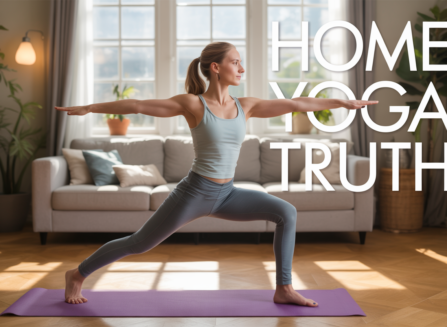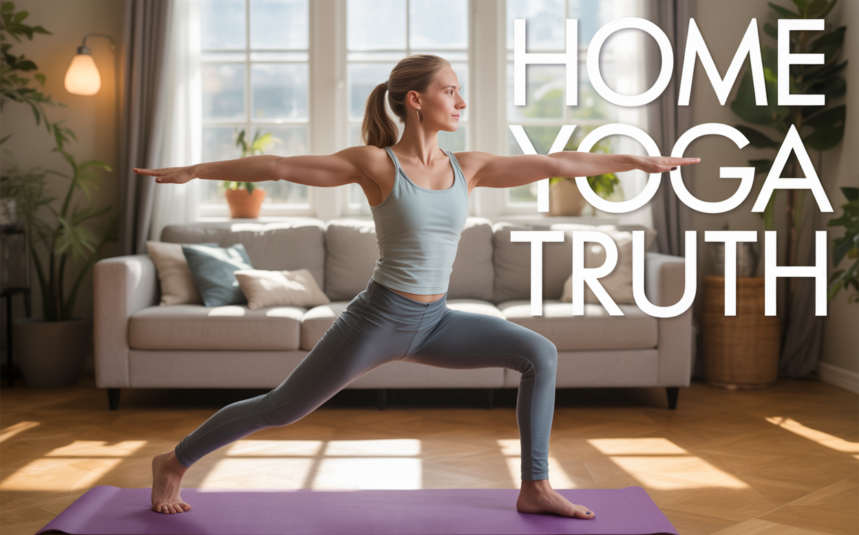
Studios charge premium prices for what we can achieve right in our living rooms – and the home yoga benefits often surpass traditional classes.
This guide is for busy people who want to start yoga at home, for beginners, experienced practitioners seeking flexibility, and anyone tired of expensive studio memberships that don’t fit their schedule.
We’ve discovered that home yoga practice offers advantages studios rarely mention. While they focus on group energy and expert instruction, practising at home gives us complete control over our yoga schedule at home, pace, and focus areas. We can pause when needed, repeat favourite sequences, and design sessions around our specific needs – whether that’s stress relief after work or energising morning stretches.
We’ll show you the surprising benefits of starting a home yoga practice, including how it builds self-awareness and saves money while delivering better results than sporadic studio visits. You’ll learn essential steps to design your home practice that rivals any class, from choosing poses you actually enjoy to creating sequences that target your goals. We’ll also cover how to set up the perfect home yoga environment and schedule that actually sticks, plus proven strategies for maintaining long-term motivation when no instructor is watching.
The truth is simple: we don’t need expensive memberships or perfect studios to build a transformative yoga routine. Our living room mat can become the foundation for deeper practice than we ever imagined possible.
Benefits of Starting a Home Yoga Practice
Develop Self-Knowledge and Self-Regulation Skills
When we practice yoga at home, we naturally develop stronger self-awareness and regulation skills. As clinical psychologist Lauren Tober highlights, home practice empowers us “to take charge of our own practice” by constantly inquiring, “Well, what works for me?” and “How can I design a practice that suits me in this moment?” This self-inquiry strengthens our svadhyaya, or self-study, which is a key component of yoga beyond the physical practice.
Learn to Self-Assess and Address Your Physical and Mental Needs
Our home yoga practice becomes a powerful tool for understanding and addressing our unique needs. Dr Gail Parker notes that “practising at home can deepen your internal awareness, allowing for a stronger connection to breath, body, mind, and spirit.” We learn to listen to our bodies’ whispers, tailoring sessions without rush or external pressure. This personalised approach allows us to focus on our body’s specific requirements, whether addressing knee pain through targeted stretches or improving posture through consistent practice.
Enjoy Complete Freedom and Flexibility in Your Practice
The beauty of our home yoga practice lies in its complete flexibility and autonomy. We can practice at any time that works within our family dynamics and lifestyle, choosing sessions ranging from two minutes to an hour based on our available time and energy. Dr Parker emphasises the “flexibility, privacy, and autonomy” of at-home yoga, allowing us to follow videos or create our own sequences. We’re free from studio schedules, comparison with others, and can use everyday items as props when needed.
Achieve Exponential Growth Through Consistent Practice
Our consistent home practice creates a foundation for remarkable transformation over time. Research shows millions of practitioners are embracing online yoga, with popular channels like Yoga with Adriene attracting 13 million subscribers. When we maintain regular practice, even starting small with just 10-15 minutes daily, we experience cumulative benefits. The convenience and accessibility of home practice naturally lead to greater consistency, and as Dr Parker notes, this “fosters discipline and self-trust, as you take full ownership of your experience.”
Essential Steps to Design Your Home Practice
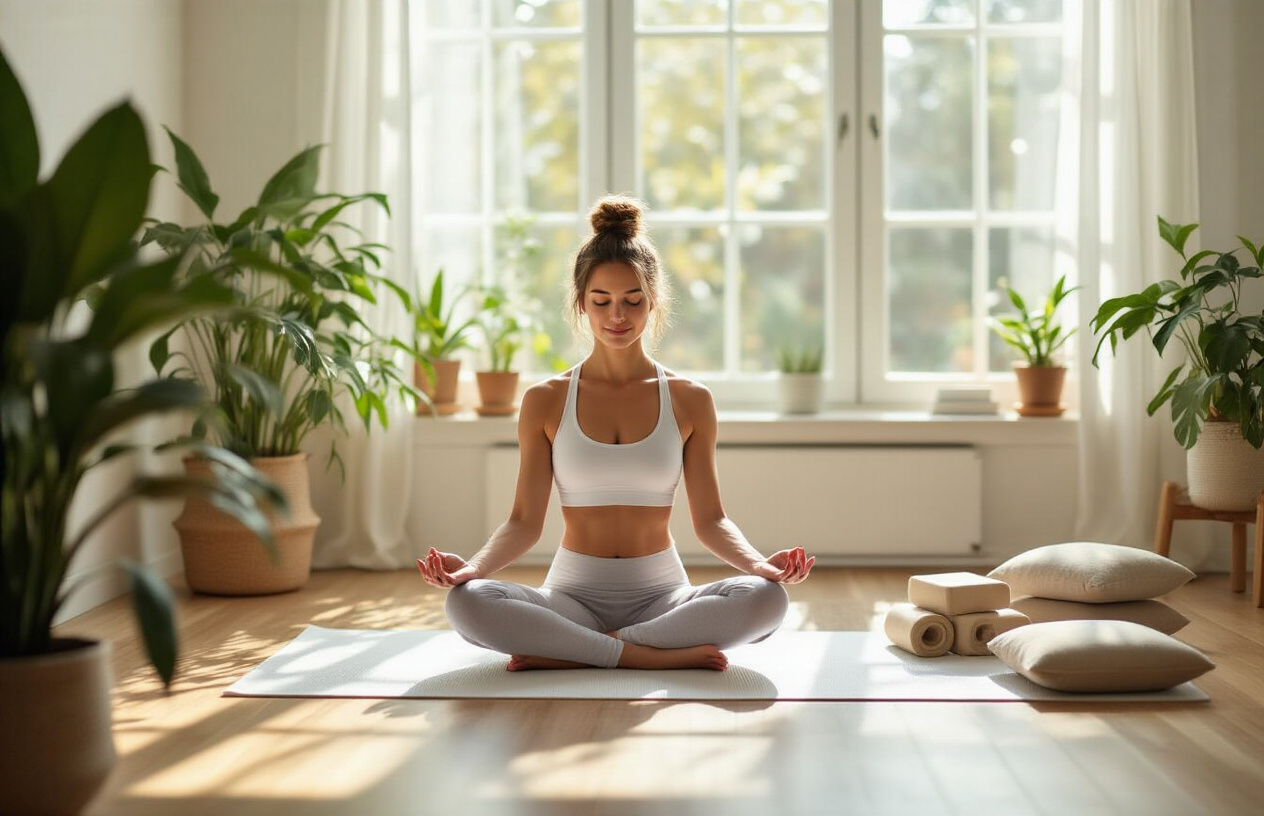
Begin with Quiet Stillness to Assess Your Current State
Before we dive into sun salutations or specific poses, we should start our home yoga practice in a comfortable seated position or even in corpse pose. When we begin with stillness, we can observe how our body and mind feel and then decide what to do based on that assessment. This quiet beginning allows us to sit quietly for a few moments and observe our state of being, creating the foundation for a practice that truly serves our immediate needs.
Choose Your Practice Direction Based on How You Feel
Now that we’ve assessed our current state, we can pick a direction that depends on how we feel. If we’re tired and pressed for time, we should choose a short restorative practice. If we’re ready to go, we can opt for a more vigorous practice. When we need grounding and stability, we should focus on standing poses, and if we need energy, we can incorporate backbends. The more we use our practice to take care of our immediate needs, the more strength and energy we’ll have in the long run.
Set a Clear Intention for Each Session
Setting an intention ensures that we’ll use our time constructively, no matter how short our practice may be. Our intentions can include creating a sense of spaciousness in a specific part of our body, working on a specific practice or pose, or noticing and letting go of any emotions that arise without judgment. This simple step transforms our practice from random movement into purposeful exploration.
Select Poses You Genuinely Enjoy and Love Doing
We should throw out the common perception that we need to use our home practice to work on poses that truly challenge us. If we want to build a consistent home yoga routine, it has to be more of a carrot than a stick. We should start by choosing four or five poses that feel great, so we’ll feel compelled rather than obligated to roll out our mat. This approach ensures our practice becomes something we look forward to rather than something we force ourselves to endure.
Building Your Pose Sequence and Structure
Take Mental Notes During Studio Classes for Home Inspiration
When we attend studio classes, we should actively observe and mentally catalogue the sequences that resonate with our bodies and minds. Instead of passively following along, we can take mental notes about pose transitions, the timing of each asana, and how the instructor builds toward more challenging poses. This careful observation becomes our foundation for creating our own home yoga practice sequences that feel familiar yet personalised.
Start with a Simple 10-Minute Routine to Build Consistency.
Our home yoga routine should begin with accessible sequences that we can realistically maintain. We can create a short series of several poses and repeat that series multiple times, adding different focuses with each repetition – first concentrating on spinal alignment, then on breath awareness, and finally on the subtle actions within each pose. This repetitive approach helps us build consistency while deepening our understanding of fundamental movements.
Focus on Quality Over Intensity and Duration
We must remember that any pose can be either effortful or quieting, depending on where it occurs in our practice and the intention with which we approach it. Rather than pushing for advanced poses or longer sessions, we should focus on practising familiar poses with greater awareness and precision. A seated forward fold done with full attention near the middle of our practice can be more beneficial than rushing through complex sequences without mindful engagement.
Creating the Right Environment and Schedule
Establish a Dedicated Practice Space in Your Home
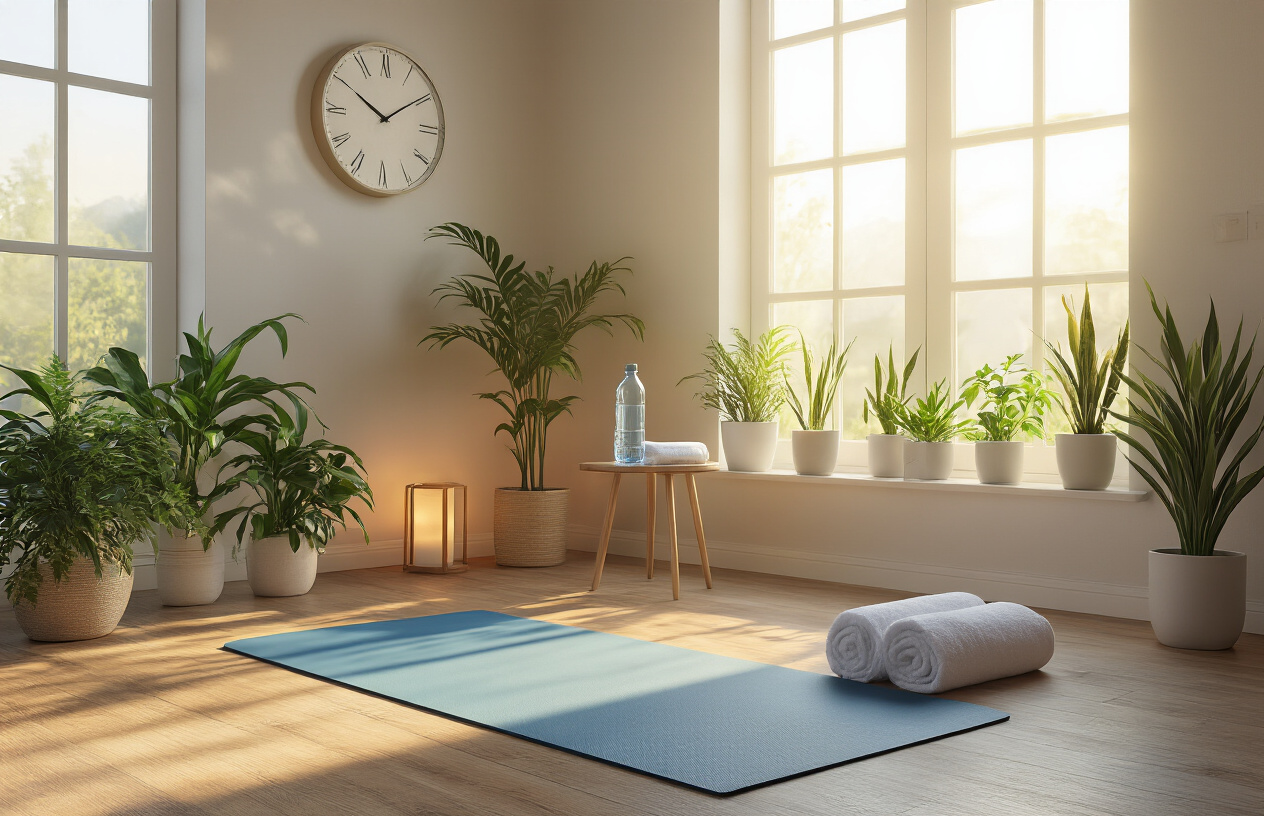
We don’t need an entire room to create our home yoga sanctuary. Even a small corner between our couch and bookshelves can transform into a peaceful practice area. The key is choosing our space with intention, looking for naturally quiet locations where we feel comfortable and can focus without distractions. Whether it’s a nook in our living room, a spot by our bedroom window, or even that cleared space between our sofa and coffee table, we only need enough room for ourselves and our yoga mat.
Find Time by Prioritising Short, Regular Sessions
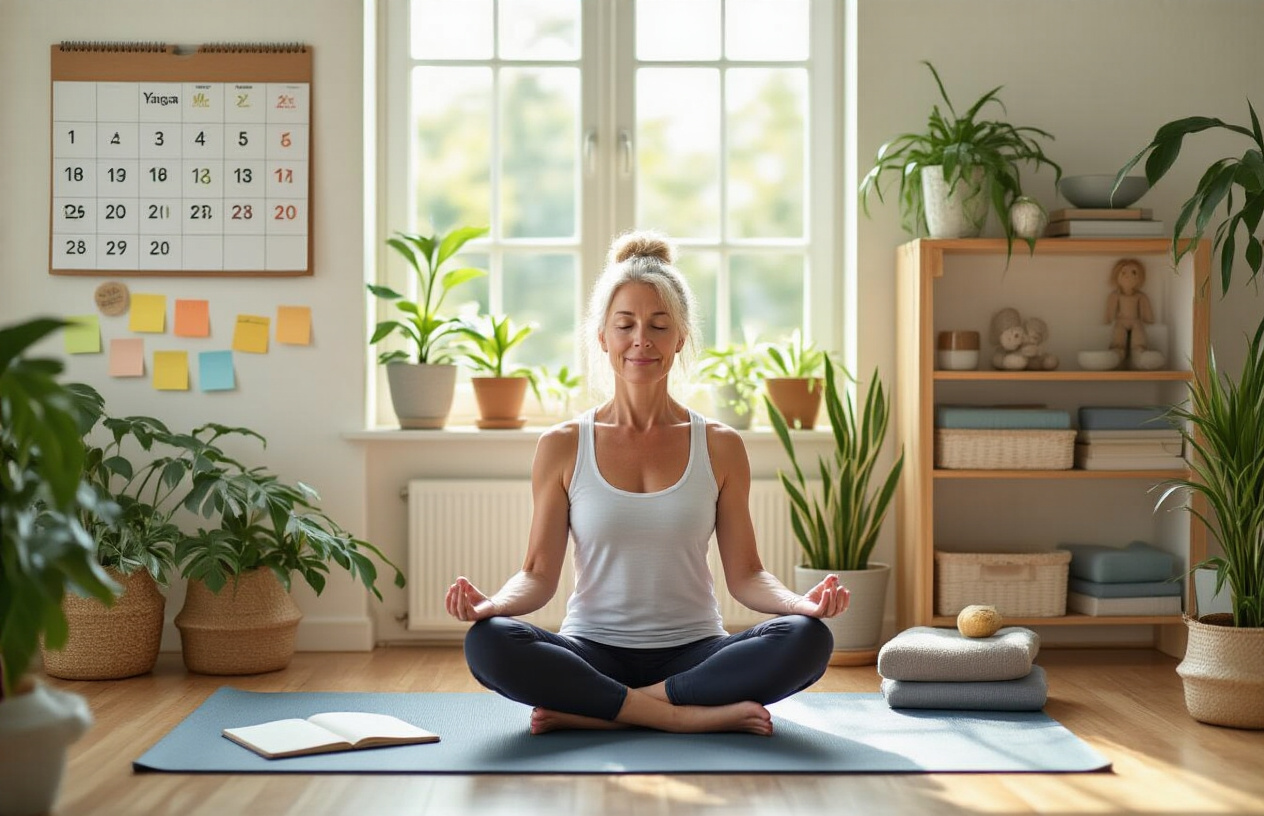
Now that we’ve identified our practice space, we need to make our home yoga routine accessible and sustainable. We should schedule regular time for our practice and treat our home sanctuary like a studio class by blocking out time on our calendar and turning off our phones. The most important aspect is making our practice easy to use – the simpler we keep it, the more likely we are to step onto our mat consistently and build a lasting home yoga practice.
Maintaining Long-Term Commitment and Motivation
Stay Flexible When Life Gets in the Way
When we encounter internal or external challenges such as low energy, limited time, pain, injury, or other unfavourable conditions, we must develop a flexible mindset that avoids the all-or-nothing trap. Rather than abandoning our home yoga practice entirely when circumstances change, we can adopt a 100% success rate mindset where any practice counts as success. This means if our planned 60-minute session can only become a 10-minute gentle stretch, we still honour our commitment to ourselves and maintain consistency.
Practice Mindfulness and Breathing Even When Unable to Do Poses
Even on days when your body resists movement—whether due to fatigue, soreness, or mental overload—you can still show up for your practice in a meaningful way. Yoga isn’t just about physical postures; it’s equally about awareness, breath, and presence.
If poses feel out of reach, shift your focus to simple breathwork. Sit or lie down comfortably, close your eyes, and bring attention to your inhale and exhale. Slow, conscious breathing—like deep belly breathing or box breathing—can calm the nervous system, reduce stress, and reconnect you with your body.
This is not a “lesser” practice. It’s a different dimension of the same discipline.
Some days, your entire session might be just:
- 5 minutes of deep breathing
- A short body scan
- Quiet stillness with awareness
And guess what? That still counts. Fully.
Use Online Resources Like Yoga with Adriene for Guidance
Let’s be real—motivation isn’t reliable. Systems are.
On low-energy days, decision fatigue is your biggest enemy. That’s where guided sessions become your cheat code. Platforms like Yoga with Adriene offer a wide range of practices—from 5-minute resets to full-length flows—so you don’t have to think, plan, or push yourself too hard.
Just press play and follow along.
The beauty of guided yoga is:
- It removes overthinking
- It keeps you accountable
- It adapts to your mood and energy
Even a short, beginner-friendly video can help you stay consistent without draining your willpower.
Remember That Any Practice is Better Than No Practice
The key lies in shifting our focus from maximum dosage to minimum dosage for our chosen activity. Instead of planning sessions around the most we can do, we set achievable minimums that build momentum and confidence. Rolling out our yoga mat for just a few exercises that inspire us, even when we don’t feel like continuing after 10 minutes, creates a foundation for long-term sustainability. This approach helps us recognise that consistency isn’t about always getting better, but about continuing over time and adapting to our life’s circumstances while keeping attention on the bigger picture.
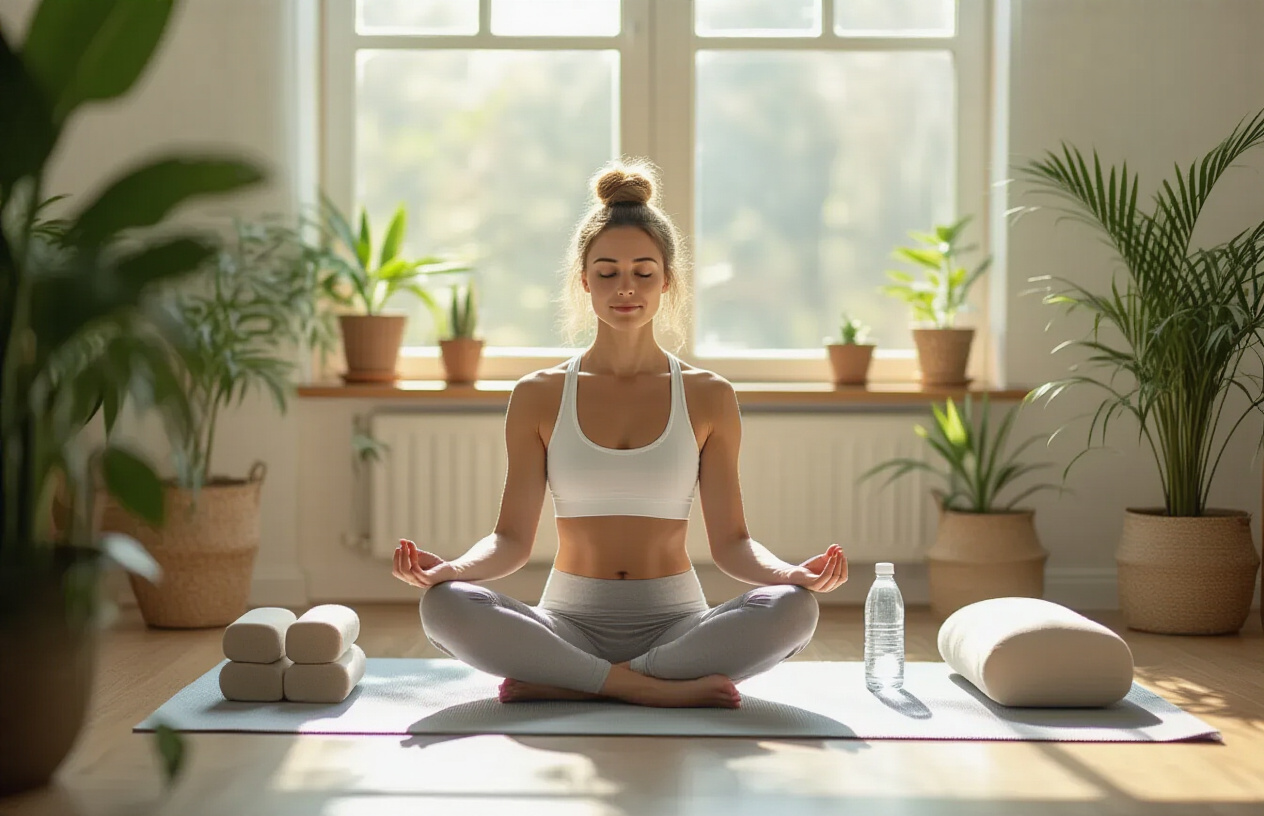
Starting a home yoga practice doesn’t require the same intensity or duration as studio classes—it just needs to be consistent and tailored to what our bodies and minds need each day. We’ve discovered that the real power lies in creating a sustainable routine that serves us, whether that’s a vigorous 60-minute flow or a gentle 10-minute sequence between our daily responsibilities.
The key is choosing poses we love, moving in all directions, and remembering that even five minutes of mindful breathing counts as practice. The shocking truth studios don’t advertise is this: we already have everything we need to transform our yoga journey at home. We don’t need expensive equipment, perfect form, or even a dedicated yoga room—just a small space, our breath, and the commitment to show up for ourselves.
When we practice regularly at home, we develop self-knowledge, learn to self-regulate, and create exponential growth that doubles and doubles again.
Our home practice becomes a powerful tool for listening to what’s happening in our minds and bodies, helping us process and release the inevitable tensions of daily living. Roll out your mat today, start with just a few poses you enjoy, and discover how this simple act can revolutionise not just your yoga practice, but your entire approach to well-being.