











How to Start a Blog Without These 5 Costly Beginner Errors
Starting a blog feels like launching into uncharted territory. You’re ready to share your expertise with the world, but one wrong move can waste months of effort and hundreds of dollars. This guide is for aspiring bloggers and business owners who want to build a successful blog from day one. We’ll walk through how to […]




What are the risks of borrowing from multiple banks?
When considering borrowing from multiple banks, there are several risks to be aware of that can impact your financial health and stability: 1. Higher Debt Burden: Borrowing from multiple banks can lead to a larger overall debt burden, potentially stretching your finances thin and making it challengiRead more
When considering borrowing from multiple banks, there are several risks to be aware of that can impact your financial health and stability:
1. Higher Debt Burden: Borrowing from multiple banks can lead to a larger overall debt burden, potentially stretching your finances thin and making it challenging to meet repayment obligations.
2. Complexity in Managing Finances: Handling multiple loan accounts from different banks can be confusing and may increase the likelihood of missing payments, leading to late fees and a negative impact on your credit score.
3. Interest Rate Variability: Different banks may offer loans at varying interest rates. If interest rates fluctuate, you could end up paying more in interest over time than initially anticipated, affecting the overall cost of borrowing.
4. Impact on Credit Score: Each loan application leads to a hard inquiry on your credit report, which can temporarily lower your credit score. Having multiple inquiries within a short period can signal financial distress to potential lenders.
5. Risk of Default: If you face financial difficulties in the future, managing multiple loan repayments simultaneously can increase the risk of defaulting on one or more loans, leading to severe consequences such as asset repossession or legal action.
It’s crucial to carefully weigh these risks against the benefits of borrowing from multiple banks, such as diversifying your sources of funding or accessing better terms. Before taking this step, consider consulting with a financial advisor to ensure it aligns with your overall financial strategy.
Follow-up questions: Have you already borrowed
See lessIs it okay to consolidate my debts?
Consolidating debts can be a strategic financial move for some individuals, but it's essential to evaluate your specific situation before making a decision. Here are some key points to consider when contemplating debt consolidation: 1. Pros of Debt Consolidation:- Simplifying Payments: Combining mulRead more
Consolidating debts can be a strategic financial move for some individuals, but it’s essential to evaluate your specific situation before making a decision. Here are some key points to consider when contemplating debt consolidation:
1. Pros of Debt Consolidation:
– Simplifying Payments: Combining multiple debts into one monthly payment can streamline your finances and make it easier to manage.
– Potentially Lower Interest Rates: If you can secure a consolidation loan with a lower interest rate than your current debts, you could save money in the long run.
– Improved Credit Score: Making timely payments through consolidation can positively impact your credit score over time.
2. Common Misconceptions:
– Debt Consolidation is not a cure-all solution and may not be suitable for everyone’s financial situation.
– It’s crucial to avoid taking on new debt once you consolidate, as this can worsen your financial position.
3. Risks and Considerations:
– Some debt consolidation options may come with fees or higher interest rates, so it’s essential to compare different offers.
– Consolidating unsecured debts into a secured loan (like a home equity loan) puts your assets at risk if you default on payments.
4. Sources to Consult:
– The Federal Trade Commission (FTC) offers valuable insights into debt consolidation options and considerations.
– Consulting with a certified credit counselor can provide personalized advice based on your financial circumstances.
In conclusion, debt consolidation can be
See lessCan I negotiate my loan interest rates?
Negotiating your loan interest rates is indeed a possibility and can be a valuable strategy to save money and make your loan more manageable. Here are some key points to consider:Understanding the Loan Terms:Before starting any negotiation, it's crucial to thoroughly understand the terms of your loaRead more
Negotiating your loan interest rates is indeed a possibility and can be a valuable strategy to save money and make your loan more manageable. Here are some key points to consider:
Understanding the Loan Terms:
Before starting any negotiation, it’s crucial to thoroughly understand the terms of your loan agreement, including the interest rate, repayment period, any penalties for early repayment, and any clauses related to interest rate adjustments.
Factors Influencing Negotiation:
Several factors can influence your ability to negotiate your loan interest rates, such as your credit score, payment history, current financial situation, and the lender’s policies. Having a good credit score and a history of on-time payments can strengthen your position during negotiations.
Preparing for Negotiation:
To negotiate successfully, research current interest rates in the market, gather offers from different lenders, and be prepared to demonstrate why you deserve a lower rate based on your creditworthiness and financial stability.
Initiating the Negotiation:
Contact your lender to express your interest in negotiating your interest rate. Clearly articulate your reasons for requesting a lower rate and be prepared to provide any supporting documentation if necessary.
Potential Outcomes:
During the negotiation process, the lender may offer a reduced interest rate, a modification of the loan terms, or alternative options to help lower your overall repayment burden. Be open to different possibilities and negotiate based on what works best for your financial situation.
Conclusion:
Negotiating your loan interest rates is a viable option that can lead to significant cost savings and a more favorable loan term
See lessHow to improve my credit score quickly?
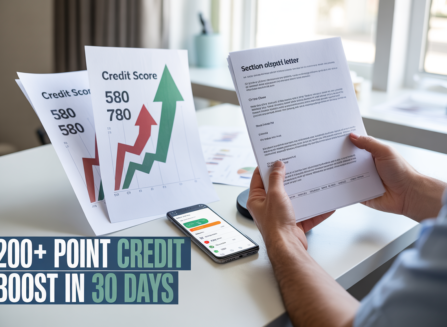
Improving your credit score quickly is possible with strategic actions. Here are some tips to help you boost your credit score efficiently:1. Check Your Credit Report:- Obtain your credit report from the major credit bureaus (Equifax, Experian, TransUnion).- Review the report for errors, inaccuracieRead more
Improving your credit score quickly is possible with strategic actions. Here are some tips to help you boost your credit score efficiently:
1. Check Your Credit Report:
– Obtain your credit report from the major credit bureaus (Equifax, Experian, TransUnion).
– Review the report for errors, inaccuracies, or fraudulent activities.
2. Pay Your Bills on Time:
– Timely payments have a significant impact on your credit score.
– Set up payment reminders or automatic payments to ensure punctuality.
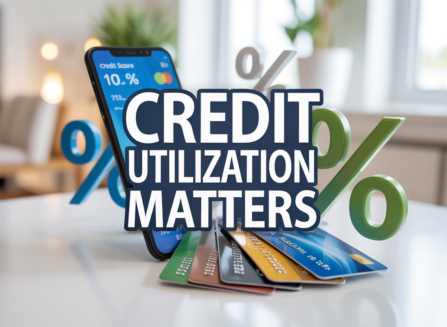
3. Reduce Credit Card Utilization:
– Keep your credit card balances low relative to your credit limit.
– Aim to utilize no more than 30% of your available credit.
4. Avoid Opening Multiple Credit Accounts:
– Opening several new credit accounts within a short period can lower your score.
– Only apply for credit when necessary.
5. Maintain a Mix of Credit:
– Having a mix of credit types (credit cards, loans) can have a positive impact on your score.
– However, only take on credit that you can manage responsibly.
6. Utilize Experian Boost or Self Lender Services:
– Services like Experian Boost can help boost your credit score by including your on-time utility and phone bill payments in your credit report.
– Self Lender allows you to build credit through a small loan that you repay over time.
**Follow these tips consistently and monitor your progress to see improvements in your
See lessWhat is debt snowball vs debt avalanche?
Debt snowball and debt avalanche are both popular methods for paying off debt, each with its own approach and benefits. Here's a breakdown of the differences between the two:Debt Snowball:- Approach: In the debt snowball method, you focus on paying off your debts from the smallest balance to the larRead more
Debt snowball and debt avalanche are both popular methods for paying off debt, each with its own approach and benefits. Here’s a breakdown of the differences between the two:
Debt Snowball:
– Approach: In the debt snowball method, you focus on paying off your debts from the smallest balance to the largest.
– Process: You make minimum payments on all your debts except the smallest one, which you pay as much as possible towards.
– Benefits:
– Provides quick wins by clearing small debts first, creating a sense of accomplishment.
– Motivates by seeing debts being paid off one by one.
– Simplifies the debt repayment process by reducing the number of creditors.
Debt Avalanche:
– Approach: The debt avalanche method involves paying off debts with the highest interest rates first, regardless of their balance.
– Process: You prioritize debts based on interest rates, focusing on the one with the highest interest while making minimum payments on others.
– Benefits:
– Saves money in the long run by targeting high-interest debts first.
– Reduces the total interest paid over time.
– Helps pay off debts faster by tackling the most financially burdensome ones.
Key Differences:
– Psychological Component: Debt snowball focuses on emotional wins, while debt avalanche is more financially strategic.
– Interest Consideration: Debt avalanche saves more on interest payments compared to debt snowball.
– Motivation Factor: Debt
See lessIs it better to take a personal loan or a home loan first?
When deciding between taking a personal loan or a home loan, there are several factors to consider to make the best choice for your financial situation. Here's a comprehensive breakdown to help you decide:Personal Loan:- Ideal for: Short-term financial needs, such as consolidating high-interest debtRead more
When deciding between taking a personal loan or a home loan, there are several factors to consider to make the best choice for your financial situation. Here’s a comprehensive breakdown to help you decide:
Personal Loan:
– Ideal for: Short-term financial needs, such as consolidating high-interest debt, unexpected expenses, or funding small home renovations.
– Advantages:
– Usually quicker to process and disburse than home loans.
– Typically unsecured, so no collateral is required.
– Can be used for any purpose without restrictions.
– Disadvantages:
– Higher interest rates compared to home loans.
– Smaller loan amounts and shorter repayment terms.
– Limited tax benefits compared to home loans.
Home Loan:
– Ideal for: Purchasing a home or making significant home improvements.
– Advantages:
– Lower interest rates compared to personal loans.
– Longer repayment terms, making monthly payments more affordable.
– Possibility of tax deductions on the interest paid.
– Secured by the property, which may result in better loan terms.
– Disadvantages:
– Longer approval process with stricter requirements.
– Involves additional costs like down payment, closing costs, and home appraisals.
– Risk of foreclosure if unable to make payments.
Ultimately, the decision between a personal loan and a home loan depends on your specific needs and financial goals. If you need funds for immediate expenses or a small project, a personal loan may be more suitable.
See lessHow can I pay off credit card debt fast?
Paying off credit card debt fast is an achievable goal with the right strategies in place. Here are some actionable steps to help you tackle your credit card debt efficiently: 1. Create a Budget: Start by mapping out your income and expenses to understand how much you can allocate towards paying offRead more
Paying off credit card debt fast is an achievable goal with the right strategies in place. Here are some actionable steps to help you tackle your credit card debt efficiently:
1. Create a Budget: Start by mapping out your income and expenses to understand how much you can allocate towards paying off your debt each month.
2. Prioritize High-Interest Debts: Focus on paying off the credit card with the highest interest rate first while making minimum payments on other cards. This approach can save you money on interest in the long run.
3. Consider a Balance Transfer: If you have a good credit score, transferring high-interest debt to a card with a 0% introductory APR can help you pay off the balance faster without accruing additional interest.
4. Explore Debt Consolidation: Consolidating your credit card debt into a single loan with a lower interest rate can simplify your payments and potentially reduce the overall interest you pay.
5. Cut Expenses: Look for areas where you can reduce spending to free up more money for debt repayment. Consider dining out less, cancelling unused subscriptions, or finding more affordable alternatives for your regular expenses.
6. Increase Your Income: If possible, take on extra work or side gigs to boost your income. Applying any additional earnings directly towards your credit card debt can accelerate the payoff process.
7. Stay Motivated: Track your progress, celebrate small victories, and remind yourself of the financial freedom you will gain once the debt is cleared. Consider
See lessWhy time is 4th dimension?
Time is considered the 4th dimension in theoretical physics, specifically in the concept of spacetime, which combines the three dimensions of space with the fourth dimension of time. Here's why time is regarded as the 4th dimension: 1. Spacetime Theory: According to Albert Einstein's theory of relatRead more
Time is considered the 4th dimension in theoretical physics, specifically in the concept of spacetime, which combines the three dimensions of space with the fourth dimension of time. Here’s why time is regarded as the 4th dimension:
1. Spacetime Theory: According to Albert Einstein’s theory of relativity, spacetime is a unified entity where space and time are intertwined. In this framework, space and time are not separate but interconnected dimensions.
2. Coordinate System: In physics, a coordinate system is used to locate events in space. Adding time as the fourth dimension allows for a more comprehensive description of events, enabling the plotting of an event’s position not only in space but also at a particular time.
3. Mathematical Consistency: Mathematically, incorporating time as a dimension alongside the three spatial dimensions maintains the consistency required for formulating physical laws and equations that govern the universe.
4. Movement in Space and Time: Just as an object can move in three spatial dimensions (length, width, height), it also moves through time. By considering time as a dimension, one can track the trajectory of objects not just in space but also across different points in time.
5. Hidden User Pain Points addressed:
– Common Confusion: The concept of time as the 4th dimension can be confusing due to its abstract nature. Understanding it as part of spacetime helps clarify this confusion.
– Risks/Misconceptions: Mis
See lessShould I invest in crypto for long-term wealth?
Investing in cryptocurrency for long-term wealth can be a complex decision with potential benefits and risks. Here are important points to consider:Hidden User Pain Points: 1. Volatility: Cryptocurrency prices can be extremely volatile, leading to significant gains or losses. 2. Regulatory UncertainRead more
Investing in cryptocurrency for long-term wealth can be a complex decision with potential benefits and risks. Here are important points to consider:
Hidden User Pain Points:
1. Volatility: Cryptocurrency prices can be extremely volatile, leading to significant gains or losses.
2. Regulatory Uncertainty: Regulatory changes or bans can impact the value and legality of certain cryptocurrencies.
3. Security Risks: Hacks, scams, and loss of private keys can result in the loss of your investment.
4. Lack of Tangible Value: Cryptocurrencies are digital assets without physical backing, which can be a concern for some investors.
Source Awareness:
1. Research: Before investing, research reputable sources like financial institutions, investment experts, and cryptocurrency market analysis.
2. Diversification: Consider diversifying your investment portfolio to mitigate risks and not putting all your wealth in one asset class.
3. Long-Term Perspective: If you choose to invest in cryptocurrency, consider a long-term perspective and avoid making emotional, short-term decisions.
Conclusion:
While investing in cryptocurrency can offer opportunities for wealth accumulation, it’s essential to be well-informed, cautious, and prepared for potential risks. Seek advice from financial advisors and consider your risk tolerance and financial goals before making a decision.
Follow-up Questions:
– What other investment options are you considering for long-term wealth accumulation?
– Have you consulted with a financial advisor to discuss your investment strategy and
See lessWhat are the tax benefits of investing in ELSS?
Investing in Equity Linked Savings Schemes (ELSS) offers several tax benefits that make them a popular investment choice in India. Here are the key tax advantages of investing in ELSS: 1. Tax Saving:- ELSS investments are eligible for a tax deduction of up to ₹1.5 lakh under Section 80C of the IncomRead more
Investing in Equity Linked Savings Schemes (ELSS) offers several tax benefits that make them a popular investment choice in India. Here are the key tax advantages of investing in ELSS:
1. Tax Saving:
– ELSS investments are eligible for a tax deduction of up to ₹1.5 lakh under Section 80C of the Income Tax Act, 1961.
– This deduction reduces your taxable income, resulting in lower tax liability for the year in which the investment is made.
2. Shortest Lock-in Period:
– ELSS comes with the shortest lock-in period of just 3 years among all tax-saving instruments under Section 80C.
– This means your money is not tied up for an extended period, offering flexibility and liquidity compared to other tax-saving options like PPF or NSC.
3. Potential for High Returns:
– ELSS invests predominantly in equities, offering the potential for higher returns compared to traditional tax-saving instruments like PPF or FDs.
– Over the long term, equities have historically outperformed other asset classes, potentially enhancing wealth creation.
4. Dividend Income and Capital Gains Tax Free:
– Dividends earned on ELSS investments are tax-free in the hands of investors.
– Long-term capital gains of up to ₹1 lakh are also currently tax-exempt, providing additional benefits.
5. **Systematic Investment Plan (SIP
See less